Light Section Steel vs Heavy Section Steel: Classification, Properties & Applications
 By
/ 2026-10-30
Section steel is one of the most fundamental raw materials for steel construction. Based on cross-section size, web & flange thickness, unit weight and load-bearing capacity, structural steel is commonly divided into light section steel and heavy section steel.
Many buyers and engineers confuse light/heavy section steel with light-gauge steel structure and heavy steel structure. Section steel refers to raw steel members, while steel structure means the complete building system. In one heavy steel workshop, main beams and crane beams are fabricated from heavy section steel, while purlins, wall girts and bracing members adopt light section steel.
This guide covers definitions, classifications, material grades, key differences, typical applications and practical selection advice for engineers, procurement teams and contractors.
What is Light Section Steel?
Light section steel features small cross-section, thin wall thickness and low unit weight. It is designed for moderate and light loads, prioritizing cost savings, low self-weight and fast installation.
Note: Light section steel is not equal to cold-formed thin-walled steel. It includes hot-rolled light series and cold-formed C/Z sections.
Common Types of Light Section Steel
- Hot-rolled light H-beams (HN narrow flange, European HEA): Thin web and flange, widely used for secondary beams, bracing, pipe supports and mezzanine platforms
- Hot-rolled light channel steel: Lighter and thinner than standard channels at the same height; parallel flanges for purlins, brackets, handrails and curtain wall framing
- Light I-beams (small sizes I10 ~ I16): Simple frames, small supports
- Equal & unequal angle steel (small & medium sizes): Trusses, bracing, connection parts, solar mounting structures
- Cold-formed C-section & Z-section: Purlin and wall girts for light steel buildings, usually hot-dip galvanized for corrosion resistance
Common Material Grades
Q235B, S235JR, SS400. Hot-dip galvanizing is recommended for anti-corrosion requirements.
Key Features
- Low self-weight, less material consumption, lower transport and lifting cost
- Cost-effective cross-section for moderate and non-primary load-bearing components
- Easy prefabrication and fast erection, suitable for prefab and short-cycle projects
- Limitation: Not suitable for heavy impact loads, large-capacity cranes or long-span main beams
Typical Applications
- Light steel portal frame warehouses, agricultural greenhouses
- Solar support structures, guardrails, billboard frames, stair frames
- Secondary beams, wall girts, roof purlins, tie rods and truss bracing
- Equipment supports, small service platforms, curtain wall keels, temporary works
What is Heavy Section Steel?
Heavy section steel has large cross-section, thick web and flanges, and high unit weight. It is engineered to withstand heavy static loads, dynamic loads, impact loads and long-span forces. It serves as the primary load-bearing member for large steel structures.
There is no single universal boundary standard. Industry practical judgment: large depth, web thickness ≥10mm, mainly used for main frames, crane beams and primary girders.
Common Types of Heavy Section Steel
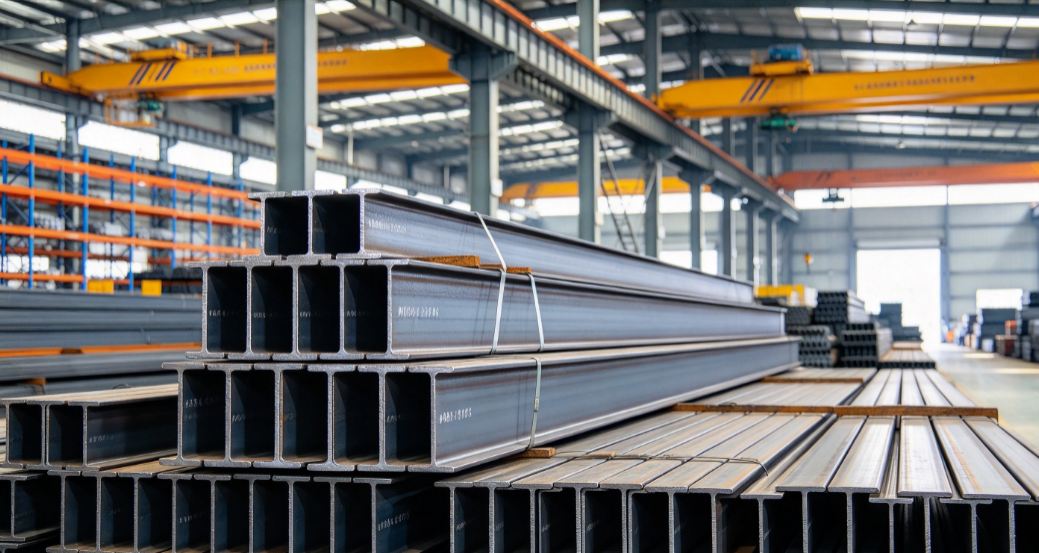
- Heavy H-beams (HW wide flange, HM medium flange, European HEB/HEM, American W series): Main columns, primary beams, crane beams, high-rise steel columns, bridge girders
- Standard heavy I-beams (large sizes starting from I20a): Traditional workshop main beams, crane track beams
- Heavy channel steel and large angle steel: Large trusses, port machinery, mining supports
- Welded H-beams & box sections: Super high-rise buildings, large-span stadiums, exhibition centres and bridges
Common Material Grades
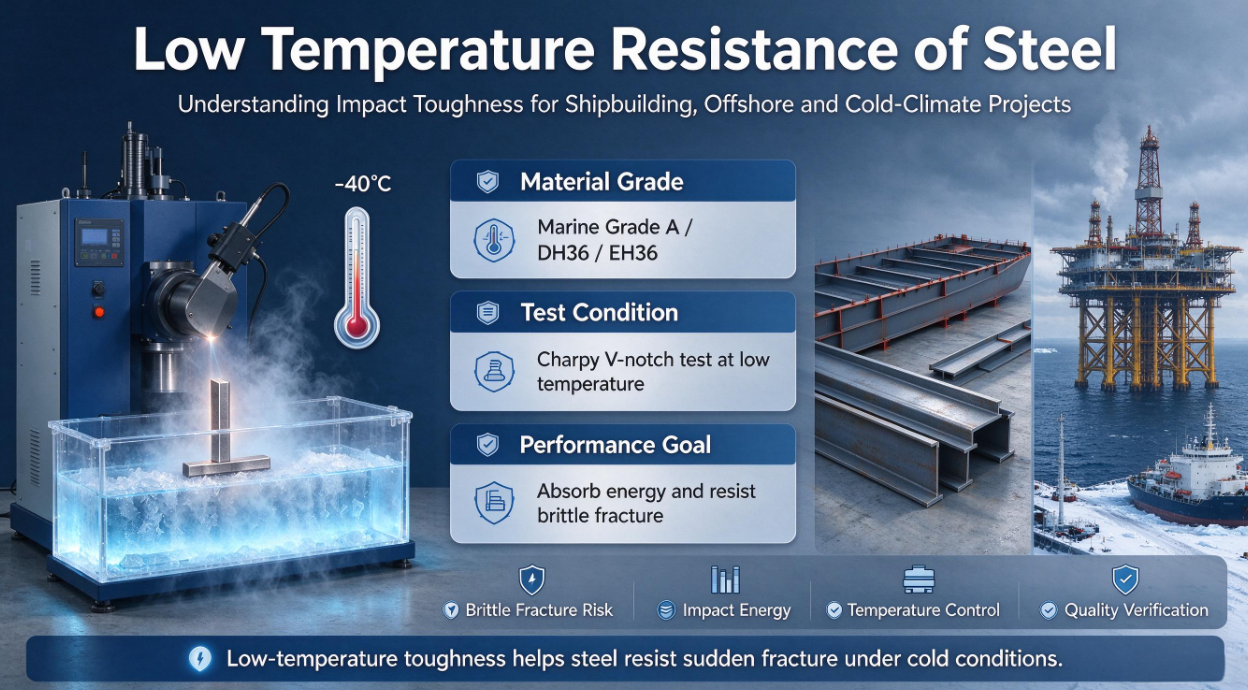
Q355B, S355JR, S355NL, A572 Gr50. For low-temperature working conditions, S355N and S355NL with good impact resistance are available. MTC mill test certificates can be provided.
Key Features
- High section modulus, excellent bending, compression and torsion resistance, stable performance
- Capable of repeated dynamic loads and impact loads from overhead cranes, vibration equipment
- Ideal for long-span structures, high-rise buildings, heavy-duty industrial projects with long service life
- Limitation: Higher self-weight, higher material cost, stricter lifting and welding requirements
Typical Applications
- Heavy industrial workshops, metallurgy plants, workshops with overhead cranes above 25 tons
- Power plants, petrochemical pipe racks, port terminals, offshore auxiliary structures
- Bridges, large stadiums, exhibition halls, high-rise and super high-rise steel buildings
- Mining equipment bases, crusher frames, large lifting equipment foundations
Light Section Steel VS Heavy Section Steel Comparison Table
| Item | Light Section Steel | Heavy Section Steel |
|---|---|---|
| Cross-section & Wall | Small cross-section, thin wall | Large cross-section, thick web + thick flanges |
| Load Level | Light & moderate static load | Heavy load, dynamic load, impact load |
| Representative Profiles | HN, HEA, C/Z purlin, light channel, small angle | HW, HM, HEB/HEM, large I-beam, large channel |
| Typical Grades | Q235B / S235JR | Q355B / S355JR / S355NL |
| Core Function | Secondary members, enclosure, bracing, secondary beams | Main frame, primary beams, steel columns, crane beams |
| Advantages | Light weight, low cost, easy transport & installation | High load capacity, good stability, anti-seismic & anti-impact |
| Typical Projects | Solar frames, greenhouses, light warehouses, purlins | Heavy factories, bridges, high-rises, petrochemical, ports |
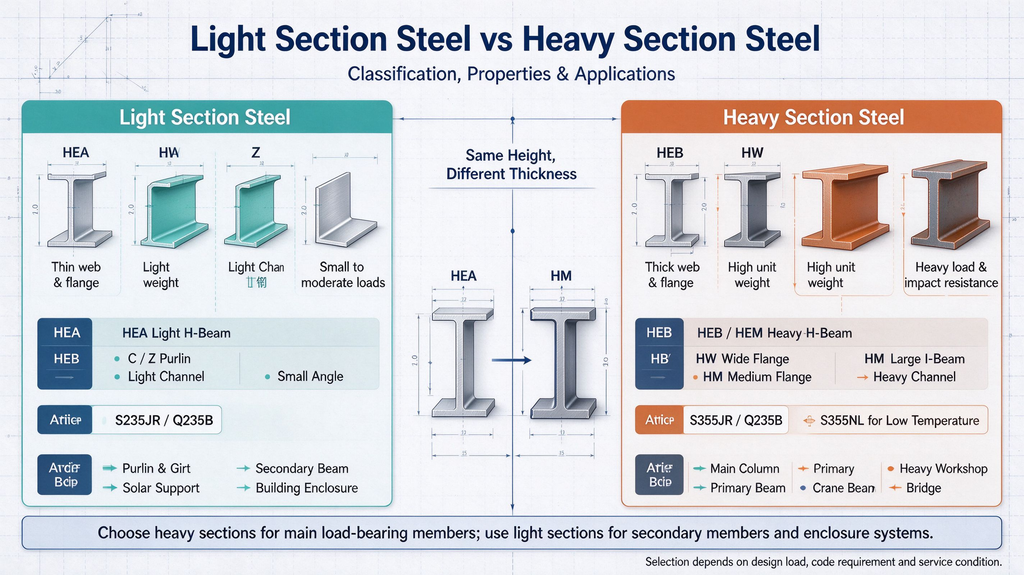
Important Note: You cannot judge light or heavy only by appearance. For H-beams with identical height, HEA belongs to light section while HEB is heavy section. Even with the same profile number, upgrading material grade (S355) will greatly improve load capacity. Always select steel according to design load and applicable standards (GB / EN / ASTM).
Common Misconceptions
- ❌ Myth: Light section steel = light steel structure; heavy section steel = heavy steel structure ✅ Fact: Light steel structure and heavy steel structure are classification of the whole building system. It is normal to combine heavy section steel for main girders and light section steel for purlins and bracing in one project.
- ❌ Myth: All cold-formed steel is light section steel, all hot-rolled steel is heavy section steel ✅ Fact: Hot-rolled series also includes light profiles such as HN and HEA. C/Z cold-formed sections are light section steel, while heavy section steel is almost hot-rolled or custom welded built-up sections.
- ❌ Myth: Light section steel is weak and cannot be used in formal projects ✅ Fact: Light section steel is economical for solar mounting and light steel warehouses as long as designed properly following codes. Its restriction is load limit instead of poor quality.
Selection Guidelines
- Refer to structural drawings: Distinguish primary load-bearing members from enclosure and bracing parts according to design load;
- Confirm applicable standards: GB/T 11263 for China, EN 10034 for Europe, ASTM A992 / A572 for North America;
- Service environment: Q235 for indoor dry conditions; hot-dip galvanizing for outdoor or corrosive environments; low-temperature impact grades like S355N for cold regions;
- Processing requirements: Cutting, drilling, painting, galvanizing, MTC certificates;
- Cost balance: Adopt heavy section steel for main load-bearing members to guarantee safety, and properly use light section steel for secondary parts to control total budget.
Conclusion
Light section steel and heavy section steel complement each other in steel construction. Neither one is universally better. The core rule is matching the steel profile with load and service conditions. Reasonable combination of both types ensures structural safety and optimizes material cost & construction schedule.
We supply a full range of hot-rolled H-beams, I-beams, channels, angles, cold-formed C & Z sections complying with GB, EN and ASTM standards. Custom cutting, galvanizing and painting services are available. MTC documents can be supplied together with shipments. We serve global contractors, steel fabricators and international procurement buyers.
👉 If you have drawings, material lists or inquiry demands, please contact us for technical datasheets and quotation.