H Beam Applications in Modern Bridge Construction: Key Scenarios & Engineering Advantages
 By
/ 2026-09-29
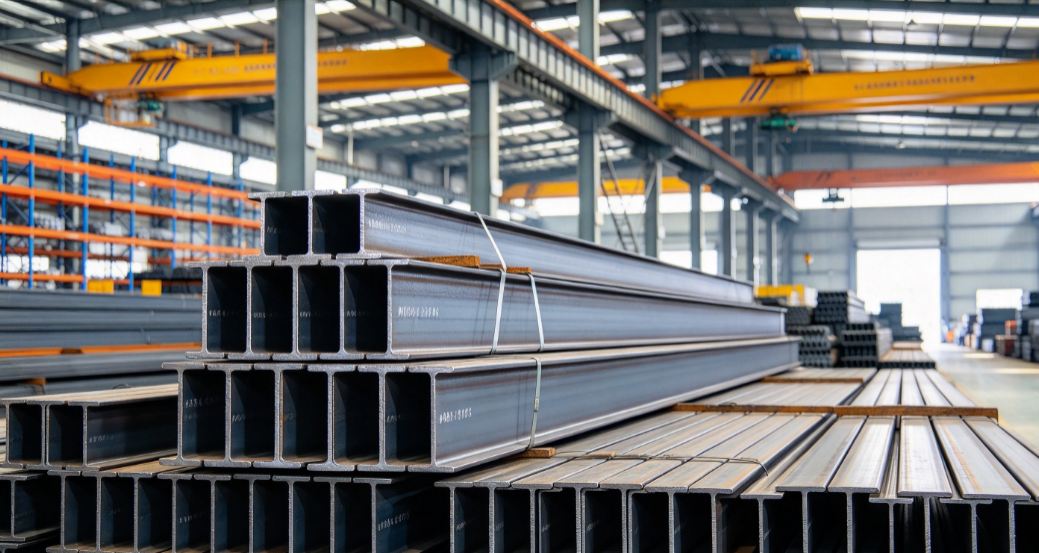
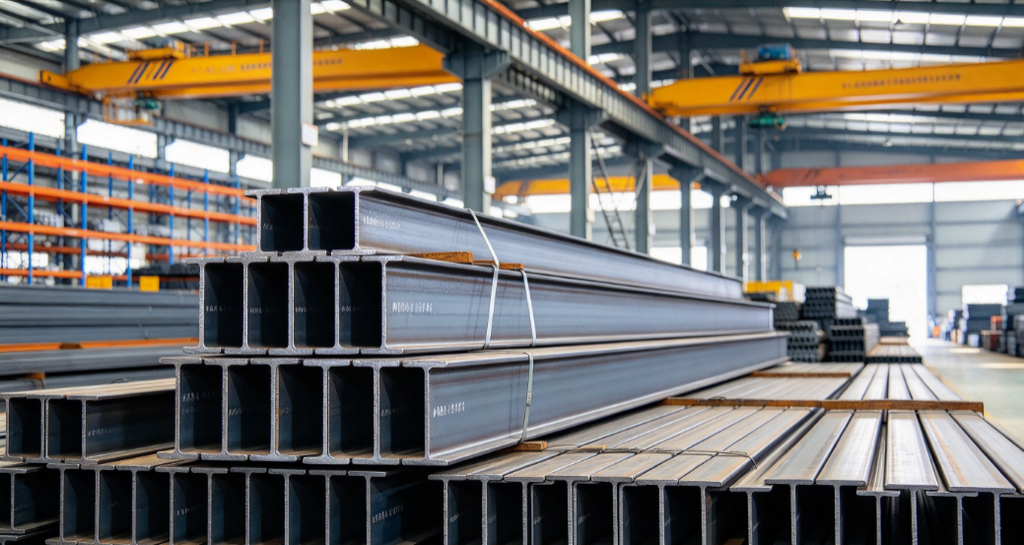
In modern infrastructure engineering, steel structures have become the backbone of high-efficiency, durable, and cost-effective bridge construction. Among all structural steel profiles, H beams (wide-flange steel beams) stand out as the most versatile and reliable option for bridge projects of all scales. Unlike traditional I-beams with narrow flanges and limited load-bearing flexibility, H beams feature equal-width flanges, thickened webs, and a streamlined cross-section, delivering exceptional bidirectional load resistance, bending stability, and seismic performance.
From small-span pedestrian bridges to heavy-duty highway overpasses and long-span railway bridges, H beams cover the full lifecycle of bridge construction. This blog will break down the core application scenarios of H beams in bridge engineering, explain their unique structural advantages, and analyze why they have become the preferred choice for global bridge infrastructure projects.
Core Structural Advantages of H Beams for Bridge Construction
Before diving into specific application scenarios, it is critical to understand why H beams dominate bridge engineering. Their structural design solves the key pain points of traditional bridge building materials and profiles:
- Superior Bidirectional Load-Bearing Capacity: The wide, symmetrical flange design enables H beams to bear vertical pressure and horizontal bending force simultaneously. Compared with ordinary I-beams, they reduce structural bending deformation by up to 27% in long-span bridge projects, perfectly adapting to dynamic loads from vehicles, pedestrians, and wind pressure.
- High Structural Stability & Seismic Resistance: The integrated H-shaped cross-section avoids local stress concentration. It maintains structural integrity under extreme weather (strong winds, heavy rain) and seismic shocks, meeting the strict durability standards of permanent bridge infrastructure.
- Lightweight & Cost-Efficiency: With higher strength-to-weight ratio than concrete and other steel profiles, H beams reduce the overall dead load of bridges. They cut foundation construction costs while shortening project cycles through prefabricated assembly.
- Excellent Constructability & Adaptability: Standardized H beam specifications support factory prefabrication, on-site rapid welding and bolting. They are compatible with various bridge types and easily modified for customized engineering needs.
Key Application Scenarios of H Beams in Bridge Construction
H beams run through every core component of bridge structures, including superstructure load-bearing systems, substructure supporting systems, and auxiliary functional structures. The following are the most common and critical engineering applications.
1. Main Bridge Girders (Core Load-Bearing Structure)
Serving as the primary load-bearing girder is the most mainstream application of H beams in bridge engineering. As the key framework connecting bridge piers and supporting the deck, main girders need to bear all dynamic and static loads of the bridge.
H beams are widely used as main girders for medium and small-span bridges (10–30 meters), including urban viaducts, rural highway bridges, and community pedestrian bridges. For large-scale highway and railway bridges, multiple H beams are arranged in parallel and combined with transverse stiffeners to form a robust girder system, which can support a single-span load of more than 200 tons. This structure evenly disperses vehicle and pedestrian loads to bridge piers and foundations, effectively avoiding local deformation and structural damage.
In long-span steel truss bridges and beam-slab composite bridges, high-grade H beams (ASTM A992, EN S355JR) are adopted to improve overall structural rigidity and extend the bridge service life.
2. Bridge Pier Caps & Support Beams
Bridge pier caps are the transitional structures connecting bridge piers and main girders, undertaking the important task of transferring upper loads to lower pier bodies and foundations. H beams are the ideal profile for manufacturing pier caps and support beams due to their excellent compression and bending resistance.
Different from traditional concrete pier caps, H beam steel pier caps feature lighter weight, higher strength, and better crack resistance. They effectively solve the problems of concrete structure cracking, weathering, and long curing cycle. In rapid bridge reconstruction and emergency repair projects, prefabricated H beam pier caps can be installed on-site within a short time, greatly improving construction efficiency.
3. Prefabricated Steel Bridge Deck Systems
Modern bridge construction increasingly adopts prefabricated modular construction, and H beams are the core component of prefabricated steel bridge decks. Engineers assemble multiple standardized H beams into a dense grid framework, then lay steel plates or concrete composite layers on the surface to form a complete bridge deck.
This H beam grid deck structure has outstanding integrity and impact resistance, which can effectively resist repeated impact loads from high-speed vehicles. Meanwhile, the hollow structure of H beams reduces the self-weight of the bridge deck by 30–40% compared with full concrete decks, reducing the load pressure on bridge piers and foundations, and lowering long-term maintenance costs.
4. Auxiliary Structural Support for Bridges
Beyond core load-bearing structures, H beams are extensively used in various auxiliary functional structures of bridges, ensuring the safety and completeness of bridge facilities:
- Highway Bridge Guardrail & Sound Barrier Supports: H beams serve as the fixed support frame for bridge guardrails and noise reduction sound barriers. Their stable structure prevents deformation caused by vehicle collision and strong wind, ensuring the firmness of auxiliary facilities.
- Overpass Sign & Lighting Bracket: For urban viaducts and highway overpasses, small and medium-sized H beams are used to build overhead brackets for traffic signs and lighting equipment, with strong wind resistance and durability.
- Bridge Temporary Support & Construction Bracket: During bridge construction, large-specification H beams are used as temporary support frames and construction operation platforms, providing stable bearing guarantees for concrete pouring, steel structure installation and other operations.
5. Foundation Pile Support for Special Terrain Bridges
For bridges built on soft soil, wetlands, and coastal special terrains, foundation stability is the key to project success. H beams can be driven underground as steel foundation piles, forming a stable deep foundation support system.
Compared with concrete piles, H beam steel piles have stronger penetration and lateral pressure resistance, which can effectively fix loose soil layers, prevent foundation settlement and bridge tilt. This application is widely used in coastal sea-crossing bridges and wetland highway bridge projects, providing reliable basic safety guarantees for long-term bridge operation.
Why H Beams Are the Future of Bridge Infrastructure
Global infrastructure construction is moving towards prefabrication, high efficiency, low carbon and long durability. Traditional concrete bridges have obvious limitations such as long construction cycles, easy aging, and difficult maintenance, while H beam steel bridges perfectly fit the development trend of modern engineering.
First, factory prefabricated H beams realize standardized production, avoiding quality instability caused by on-site concrete construction. Second, on-site assembly construction greatly shortens the project cycle, reduces road occupation and traffic impact, and improves construction efficiency. Third, steel H beams are 100% recyclable, meeting the requirements of green and low-carbon infrastructure construction, and reducing engineering waste and environmental pressure.
In addition, with the upgrading of steel processing technology, high-strength, corrosion-resistant, and weather-resistant H beams have further solved the corrosion problem of steel structures in humid and marine environments, greatly extending the service life of bridge projects.
Final Thoughts
From small pedestrian bridges to large sea-crossing and railway bridges, H beams penetrate every key link of bridge construction with their unique structural advantages and flexible application scenarios. As a high-efficiency, economical and durable structural steel profile, H beams not only improve the safety and stability of bridge projects, but also reduce construction and maintenance costs, becoming an indispensable core material in modern bridge infrastructure construction.
With the continuous acceleration of global infrastructure upgrading, H beam steel structures will continue to lead the innovation and development of bridge construction technology, creating more high-quality and long-life traffic infrastructure for urban and transportation development.