Long-Term Warehouse Storage Best Practices for Structural Steel Sections
 By
/ 2026-10-23
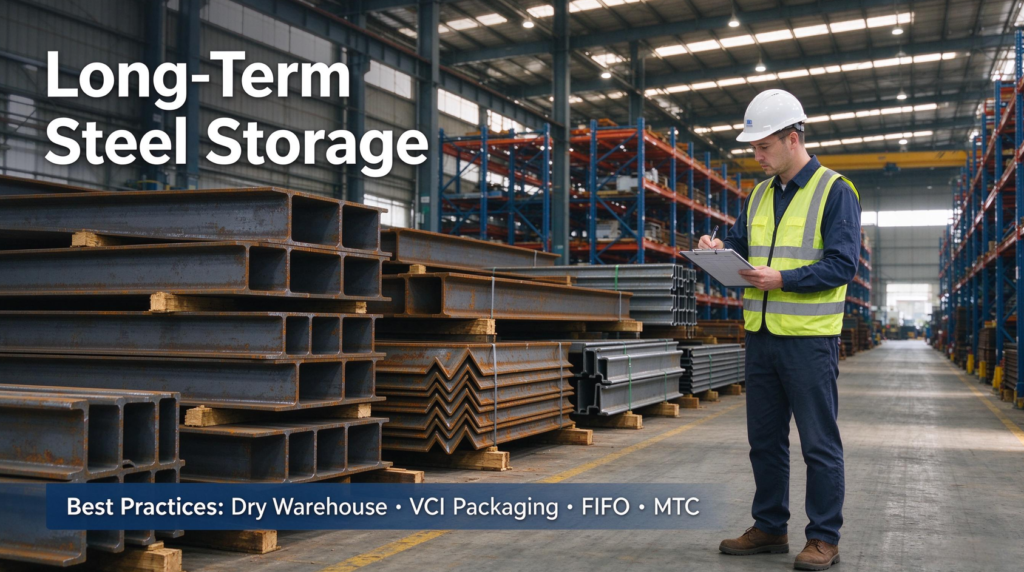
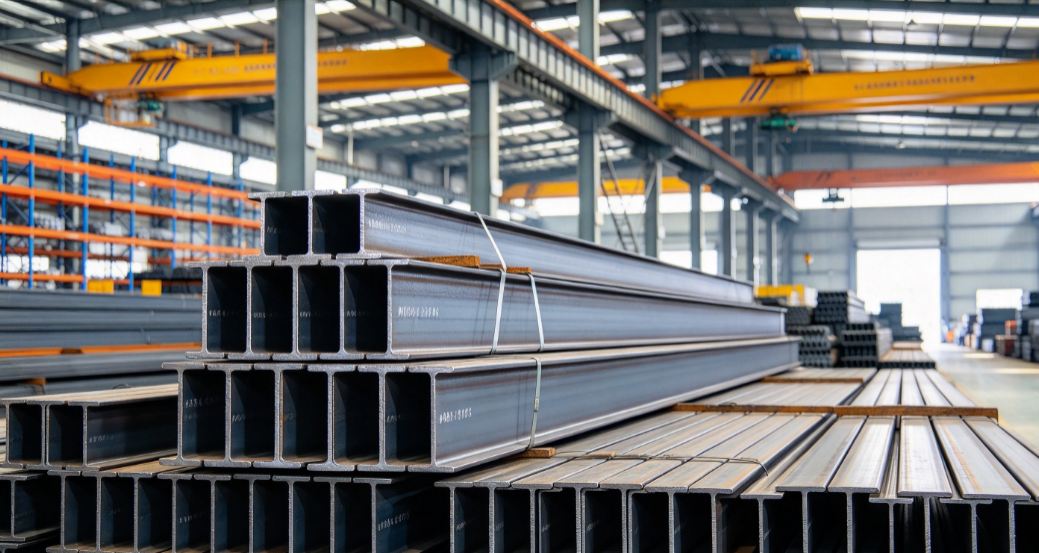
Structural steel sections, including H beams, I beams, angle steel, channel steel and U channels, are widely used in construction, engineering, bridge and mechanical projects. Many buyers and steel distributors need to stock these profiles for weeks or months before delivery. Improper long-term storage can lead to surface rust, bending deformation, galvanic corrosion, scratches, batch mixing and even rejection during third-party inspection (MTC review).
This guide covers the key warehouse management rules for long-term storage of steel sections, helping you preserve product quality, maintain surface condition and meet export inspection standards.
1. Warehouse Environment Selection & Humidity Control
Moisture is the primary cause of carbon steel oxidation and rust formation. For long-term storage, indoor covered warehouses are always preferred over open-air stacking.
- Keep the storage area clean, well-drained and well-ventilated. Avoid warehouses with water leakage, dripping pipes or poor drainage.
- Control relative humidity ideally below 60%. Install dehumidifiers or ventilation fans in humid, coastal or tropical warehouses to reduce condensation risk.
- Separate steel sections from corrosive materials: acids, alkalis, salt, cement, chemical fertilizers and other corrosive goods must not be stored together with steel profiles.
- Keep away from dust, harmful gas and industrial exhaust that may contaminate steel surfaces.
Important note: Do not fully seal steel bundles inside non-breathable plastic wrapping. Airtight packaging traps internal moisture and creates condensation, accelerating rust. Use breathable VCI packaging instead for extended storage.
2. Elevated Stacking & Support Design to Avoid Deformation
Steel sections are long, heavy and prone to sagging or bending if supports are poorly arranged. Never place profiles directly on wet concrete or ground.
- Place steel bundles on timber dunnage, steel sleepers or concrete blocks, keeping the steel at least 10–20 cm above the warehouse floor to block capillary moisture from concrete.
- Arrange supporting points evenly along the beam length. For long H-beam and I-beam sections, enough supports must be used to prevent permanent bending under self-weight.
- Stack heavier profiles at the bottom and lighter bundles on top. Do not overload stacks beyond the bearing capacity of supports or racks.
- Separate different grades, sizes and batches clearly. Keep Q355, S355JR, S355N and other steel grades in separate zones to avoid mixing and galvanic corrosion.
- Use spacers between layers to prevent direct metal-to-metal contact, which can cause galvanic corrosion and surface scratches. Do not store carbon steel together with copper or other dissimilar metals.
3. Anti-Corrosion & Surface Protection for Long Storage
Carbon steel sections without galvanized coating require dedicated anti-rust treatment for storage over 30 days.
- Clean steel surfaces before storage: remove mill scale, dust, salt residue and water stains. Any existing light rust should be cleaned before long-term stocking.
- Apply anti-rust oil on exposed cut ends, machined surfaces and weld edges. For storage longer than 3–6 months, wrap bundles with VCI anti-corrosion paper or VCI film. Add desiccant packs for high-humidity environments.
- Galvanized steel sections have better corrosion resistance, but still need protection from standing water and chemical contamination. Avoid scratching the zinc coating during stacking and handling.
- If temporary outdoor storage is unavoidable, use waterproof, breathable tarpaulin covers. Ensure slopes for water runoff and maintain air circulation underneath the cover.
4. Marking, Stock Rotation & Inventory Classification
Clear marking and stock rotation reduce quality risks and simplify order picking for export shipments.
- Attach permanent labels on each bundle, marking steel grade, dimension, batch number, heat number, MTC reference and production date.
- Apply FIFO (First In, First Out) stock rotation. Older batches should be released first to minimize long-stock aging risk.
- Keep aisles clear for forklift access, visual inspection and loading operations. Do not block drainage or ventilation passages.
5. Regular Inspection & Maintenance Schedule
Scheduled inspection is essential to catch small issues before they become costly quality defects.
- Conduct weekly visual checks for water leakage, condensation, rust spots, packaging damage and bundle deformation.
- Every 90 days, recheck anti-rust packaging and coatings. Reapply anti-rust oil or replace damaged VCI wrapping if needed.
- Document all inspection records, including humidity readings, rust conditions and maintenance actions. This supports factory audits and third-party inspection.
- Immediately wipe off surface water or condensation once found. Isolate rust-affected bundles and treat them before corrosion spreads.
6. Safety & Handling Precautions
- Follow rack load limits. Do not overload storage racks. Wear safety helmets and safety shoes during handling.
- Use proper lifting tools. Avoid magnet lifting if the bundle straps may be damaged. Secure loose profiles to prevent rolling or collapse.
- Keep fire prevention equipment available in the warehouse area.
Conclusion
Long-term storage of structural steel sections is not just about stacking goods; it is a systematic corrosion and deformation control workflow. A dry ventilated warehouse, elevated support, proper anti-rust packaging, separated grade zoning and regular inspection can effectively protect H-beam, I-beam, angle steel and channel steel from rust and bending.
Well-managed steel storage preserves your product appearance and mechanical properties, reduces rejection risks during inspection and helps you deliver qualified steel sections to construction and industrial clients worldwide.