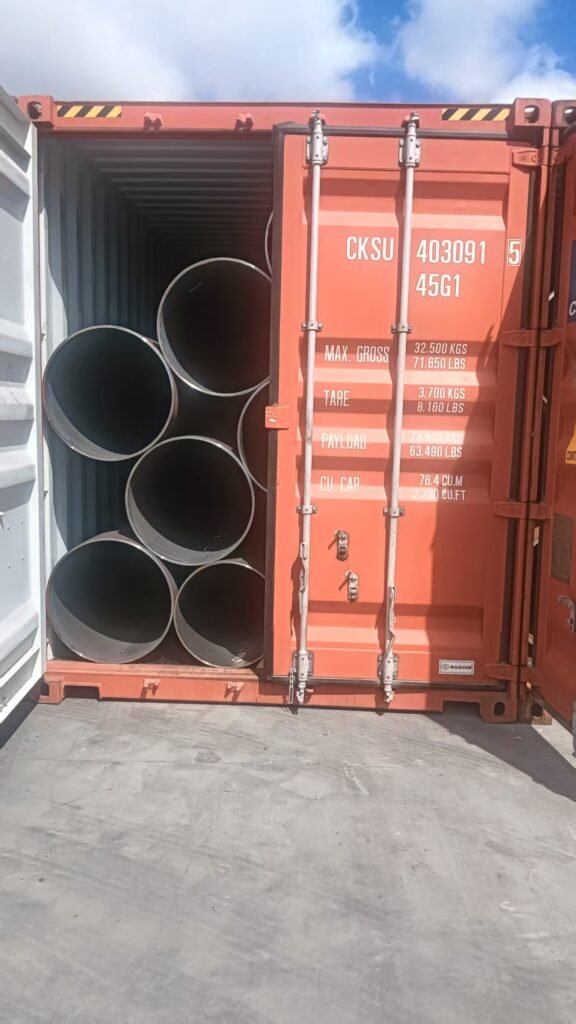
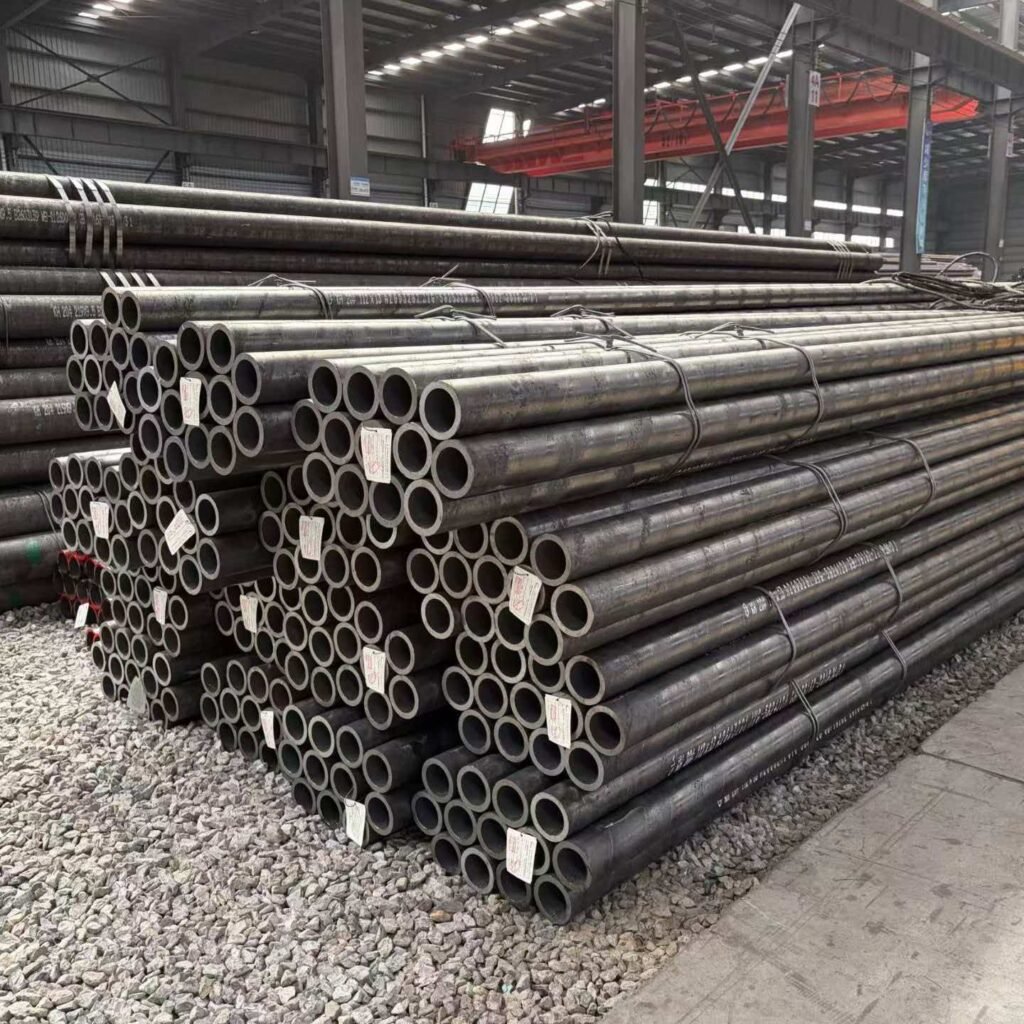
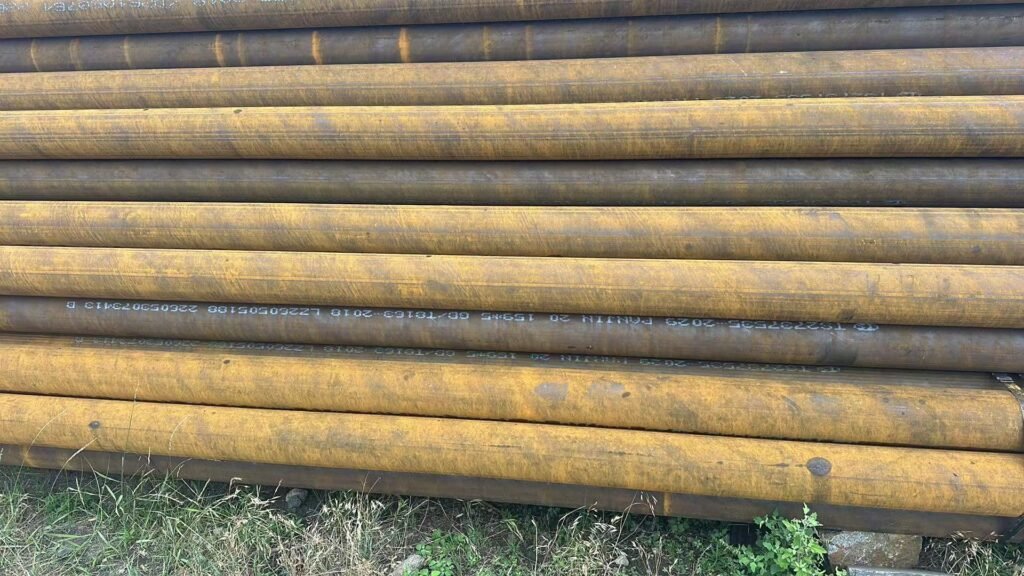
A welded steel pipe is manufactured by forming a flat steel plate or strip into a cylindrical shape and joining the edges with a weld seam. Common types include ERW (Electric Resistance Welded), LSAW (Longitudinal Submerged Arc Welded), and SSAW (Spiral Submerged Arc Welded) pipes.
Q: What are the key characteristics of welded pipe?
Cost-effective — lower production cost than seamless pipes Available in large diameters (up to 3000mm+ for LSAW/SSAW) Consistent wall thickness and surface finish (especially ERW) Weld seam is the primary structural variable — quality depends on welding process and inspection Wide range of grades and standards (API 5L, ASTM A53, EN 10219)
Q: What are the typical applications of rectangular tubes?
Water, gas, and utility distribution pipelines Structural piles, columns, and scaffolding tubes Fencing, posts, and handrails Oil and gas transmission lines (LSAW/SSAW, API 5L) Pylons, sign posts, and traffic infrastructure